


Online newspaper based in Matera
EcocNews is registered at the Court of Matera in the press register n. 2/2021
Editor in chief: Mariateresa Cascino. Founder and editorial director: Serafino Paternoster
via San Francesco, 1 - 75100 Matera (Italy)



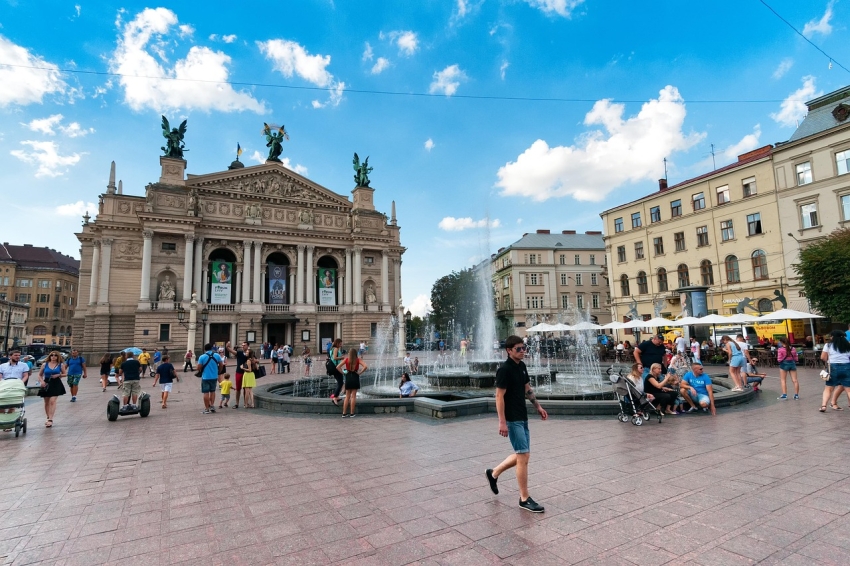 Lviv National Opera
There will be three European capitals of culture in 2030. One will be designated by Cyprus, the other by Belgium, and the third will be chosen between Nikšić (Montenegro) and Lviv (Ukraine). For all three countries we have entered the shortlist phase and therefore the cities have been working around their cultural projects for some time.
Lviv sees culture as the foundation of national security on its way to becoming European Capital of Culture 2030
Ecocnews interviewed Yulia Khomchyn, head of Lviv’s ECoC 2030 bid and director of the Cultural Strategy Institute, which coordinates the application.
In October 2024, Lviv submitted its application for the title of European Capital of Culture 2030. Two months later, it was announced that the city had reached the final. By September this year, the team is working on the final version of the application to represent Lviv with dignity in the final selection round. Lviv’s bid, shaped during the full-scale war, is built around the concept of “Responsibility to Be.”
Lviv is the first Ukrainian city to take part in this European Union competition. Here, we explore why, during wartime, culture has become not only a space for creation but also a space of responsibility — and what deeper meanings lie within Lviv’s concept.
What does it mean to prepare a cultural programme during the war?
For Lviv, culture is no longer only a space for creativity but also a tool for resilience, healing, remembrance, and national security. The team behind the city’s ECoC 2030 bid sees cultural processes as critically important for the country’s security: they bring people together, help process collective trauma, and offer hope where war tries to destroy it.
In Ukraine today, culture has become a way to endure the war: to speak about pain and loss, to confront trauma, and to bear witness. It’s no longer just about peaceful growth, but about survival. Even while fighting and volunteering, Ukrainian artists keep creating — and their work emerges from a completely transformed reality. This creativity helps preserve humanity in the harshest, most inhuman conditions.
A culture that witnesses, cares, envisions, and takes responsibility
The European Capital of Culture initiative was established from the beginning to demonstrate the transformative power of culture in cities and societies. But Lviv’s experience brings a special meaning: culture as the foundation of national resilience in times of war. The concept of “Responsibility to Be” was born out of loss, forced migration, broken ties — and at the same time, solidarity and dignity. It’s a conversation not only about what we create, but also about what we allow or refuse to let happen.
“Responsibility to Be invites a global dialogue on culture understood as responsibility — not only for what we bring into the world, but also for what we choose to allow or stop from happening. At its heart, it speaks of dignity, empathy, and holding on to our humanity even in the darkest moments,” says Yuliia Khomchyn.
In its bid, Lviv proposes a discussion about the role of culture in new realities — not only in Ukraine, but across Europe. At the conceptual level, the city’s programme is built around the ideas of witnessing, caring, and envisioning. The application addresses themes of collective and individual trauma, practices of remembrance, diversity of experience, recovery through culture, heritage, social integration, innovation, education, and inclusion.
Is it an application on behalf of all Ukraine
In 2022, when Ukraine received EU candidate status, Lviv finally decided to apply for the title — not despite the war, but because of it. Culture had ceased to be just about creativity and became an element of national security, a tool for healing and resilience.
Preparation for the bid began in early 2024 and turned into a truly collective process. More than 500 people contributed: cultural practitioners, artists, researchers, volunteers, veterans, and those who had directly experienced the war and the loss of home. Many cultural institutions from frontline cities — Kharkiv, Mariupol, Berdiansk — relocated to Lviv and became part of the city’s new vision.
This bid goes beyond Lviv itself. It’s shaped by reflections on other Ukrainian cities, our collective experience of war, and the shared longing for freedom and safety. We see culture as a force that can support renewal — both of infrastructure and of people’s inner worlds,” explains Yuliia Khomchyn.
For Lviv, this participation isn’t just about the title. It’s an attempt to have an honest conversation about what culture can mean in times of crisis, and to weave the Ukrainian experience into the broader European context. And it’s an experience the team believes is meaningful for all of contemporary Europe.

Ecocnews Founder, Journalist, repentant jazz guitarist, music critic and film lover.
Online newspaper based in Matera
EcocNews is registered at the Court of Matera in the press register n. 2/2021
Editor in chief: Mariateresa Cascino. Founder and editorial director: Serafino Paternoster
via San Francesco, 1 - 75100 Matera (Italy)